
Silver Spring Previous Residents by Era
Work backward from whatever record holds a current parcel reference. Then widen the search into older overlapping collections. Silver Spring keeps no separate municipal land-record system. Montgomery County and Maryland custodians hold the rest. None of the sources runs without gaps. Property, court, estate, and historical layers all sit with those custodians. A deed documents a transfer. A directory shows a listed occupant. A census shows a household. A permit dates work. Compare dates carefully and keep each record's purpose separate while you trace who lived at a Silver Spring address before you.
| Source | Years it covers | Where held | What it shows |
|---|---|---|---|
| SDAT property and sales data | Current/live and recent transfer history | SDAT online | Owner, premises and mailing fields, values, sales, deed reference |
| MDLandRec and equity indexes | Modern guide: Jan. 1977-Nov. 2025; equity indexes: 1777-1981 | Maryland State Archives / Circuit Court | Deeds, liens, mortgages, legal descriptions, party trail |
| Klinge atlases | 1931-1959 | Montgomery History | Tracts, footprints, subdivision clues, liber and folio references |
| Polk and Nelson directories | Selected 1912-1973 years; phone book 1995-present | Montgomery History | Listed occupant or subscriber, address, and some printed details |
| Federal census | 1790-1950 public; later releases follow the 72-year rule | NARA and library databases | Household composition, age, birthplace, and occupation |
| DPS permits | Generally Oct. 17, 1986-present; wells/septic to 1943 incomplete | Montgomery County DPS | Construction or alteration, contacts, status, and inspection dates |
Recent questions start with the parcel and transfer reference. An older address works differently. Bridge from the modern index to the Maryland State Archives, bound directories, maps, or census material. A missing span is not a dead end, because it points to the next custodian or collection worth checking.
Silver Spring Parcels Start the Past Trail
The Maryland SDAT Real Property Data Search is the tool for locating the present parcel. Select Montgomery County, code 16. Then search by street number and street name, an account identifier, or a map reference. SDAT itself warns against owner-name, town, neighborhood, subdivision, and ZIP searches. Leave off street directions and suffixes. A truncated street name plus an asterisk can broaden a street-name search. Save the account, legal description, transfer date, deed reference, and both address types. The premises or situs field describes the physical parcel. The mailing field is a tax-roll delivery address only. It is not proof of residence. A different mailing address may belong to an agent, lender, or estate. It may also belong to a business or an owner living elsewhere. That distinction matters. It keeps parcel evidence from hardening into an unsupported claim about past residents of Silver Spring.
| Account and parcel fields | Connect the SDAT result with county GIS, plats, and land-record searches. |
|---|---|
| Premises address | Identifies the physical property, also called the situs address. |
| Mailing address | Shows a tax-roll destination and may be different from the premises. |
| Liber and folio | Point to the recorded land document volume and page reference. |
| Legal description | Supplies a more durable bridge when old deeds do not use a modern street address. |
Note: A present parcel card is a starting point for tracing previous residents of Silver Spring, not a complete roster of everyone who lived at the property.
Silver Spring Previous Residents Before 1977
Modern land records have a cutoff. The Montgomery range on MDLandRec begins January 1, 1977. Maryland State Archives equity-index books reach from 1777 to 1981. The overlap matters. No single web cutoff marks the start of county land history. Montgomery County land records begin in July 1777. For property tied to the area before the county split from Frederick County, the earlier material sits in Frederick County records instead. Older instruments rarely use a familiar street number. They favor a tract name and metes-and-bounds description. Patent names like “Bite the Biter,” “Magruder's Folly,” and “Chiswell's Inheritance” act as research bridges when they surface in a deed. Search the earlier owner's surname, legal description, lot, block, parcel, cross streets, and tract terms. When a modern address will not appear, the equity indexes at the Maryland State Archives plus the courthouse or archive fallback are the right next steps. The Montgomery County land-records page details access. The Circuit Court's Public Information Room handles in-person requests. MDLandRec supplies the free account-based route to images online. The public room is open Monday through Friday from 8:30 to 4:30, and a certified-copy desk handles records needing official certification.
Trace Silver Spring Previous Residents Through Deeds
A chain of title comes together one recorded transfer at a time. Start with the SDAT owner or deed reference. Then open the image through MDLandRec. Search by party name, book and page, instrument, or tax account. Montgomery County accepts the SDAT tax-account identifier. The index is organized by people and documents. No street-address list exists, so a backward Silver Spring search must follow each land transaction itself.
- Find the current parcel in SDAT and record its account, legal description, transfer details, and liber or folio.
- Open the related land record in MDLandRec and capture the recording date, instrument, grantor, grantee, legal description, and prior-deed reference.
- Search the seller from that deed as a grantee to locate the seller's earlier acquisition.
- Repeat the grantee-to-prior-grantor cycle, keeping a dated table of each document and image or page reference.
- Move to the equity-index books, courthouse, or Archives material when the modern online run no longer supplies the next link.
- Grantor and grantee
- The grantor transfers an interest in land. The grantee receives that interest in the recorded instrument.
- Chain of title
- A documented sequence of land transfers that links one owner to an earlier owner. It does not prove who occupied the property.
- Legal description
- The parcel language used in a deed, such as a lot and block or a historic tract description. It can outlast a street-address change.
Silver Spring Address Changes and Maps
Address continuity is the hardest part of a previous-residents search. Older deeds lean on patent names, tract descriptions, and metes and bounds. Directories abbreviate. Postal labels shift. Silver Spring is a postal and regional name larger than the census-designated place. A historical record may say Colesville, White Oak, Wheaton, Aspen Hill, Burtonsville, or Takoma instead. Preserve the printed label. Compare it with the legal parcel rather than swapping in a current name. The Klinge Real Estate Atlases from 1931 to 1959 sit at Montgomery History. They make a practical local bridge. They show larger tracts, house footprints, subdivision clues, and liber or folio references. The Sanborn record is thinner. The Library of Congress lists no Silver Spring run. So leave a house's map date unstated. Montgomery History also holds Mutual Fire Insurance policies from 1848 into the 1910s. A collection description cites 1925. Those policies describe structures and owners. They are not residence records, though. Treat them as supporting evidence in a Silver Spring house history.
Silver Spring Previous Residents in Directories
Deeds prove who owned a property. Occupants are a different story. For past residents of Silver Spring, the address and the year are your bridge. Use them to enter the old directory volumes. A street or criss-cross section, when a volume has one, starts from the house number. It leads you to the alphabetic entry. Name variants and printed details often appear there. The Polk and Nelson volumes on hand run discontinuously. Older phone books sometimes list subscribers only. For collection years, see the Silver Spring City Directory page. It also gives guidance on reading their marks.
Set each dated directory observation beside the nearest census period. A 1954 or 1960 Polk entry may name a listed occupant and an occupation. The 1950 census can then add age and household relationships. A 1960 or 1962 directory shows whether the same name stayed put or moved on. Federal census schedules stay public through 1950 under the 72-year rule. Neither source pins down an exact move date. Any gaps deserve a note in your records.
- Write the address in the form printed by the directory and also keep its present parcel identifiers.
- Search the nearest located directory year, first by address if a street section exists, then by name.
- Compare the next available directory, noting a changed spelling, address, or absent listing.
- Check the closest public census and record only what that census page actually states.
- Use an obituary, estate file, or local newspaper item to test a death, move, or family connection at the trail's endpoint.
Lawful use. Silver Spring house-history research is for family history, estate and heir questions, and personal property curiosity. Do not use a record trail to track, threaten, or harass a living person.
Silver Spring Previous Residents at Montgomery History
Montgomery History draws a line that saves researchers time. Land records never state when a building went up. A house history needs deeds and patents. Pair those with maps, Klinge atlases, Mutual Fire Insurance policies, Maryland Historical Trust material, and historic-house files. Research appointments round out the process. House files are searchable by address or estate title. They are not comprehensive. A permit dates construction or alteration work. It does not name the first or only resident of the place.
DPS records generally start October 17, 1986. Well and septic material reaches back to about 1943 but stays incomplete. Some needs go beyond the public search. Plans, older files, and similar material take a Department of Permitting Services records request under the Maryland Public Information Act. DPS charges fees after the first two research hours. Its normal goal is ten business days, though the statute allows up to 30.
The Montgomery History property-research guide maps the local route. It links SDAT, deeds, maps, patents, insurance material, and historic-house files.
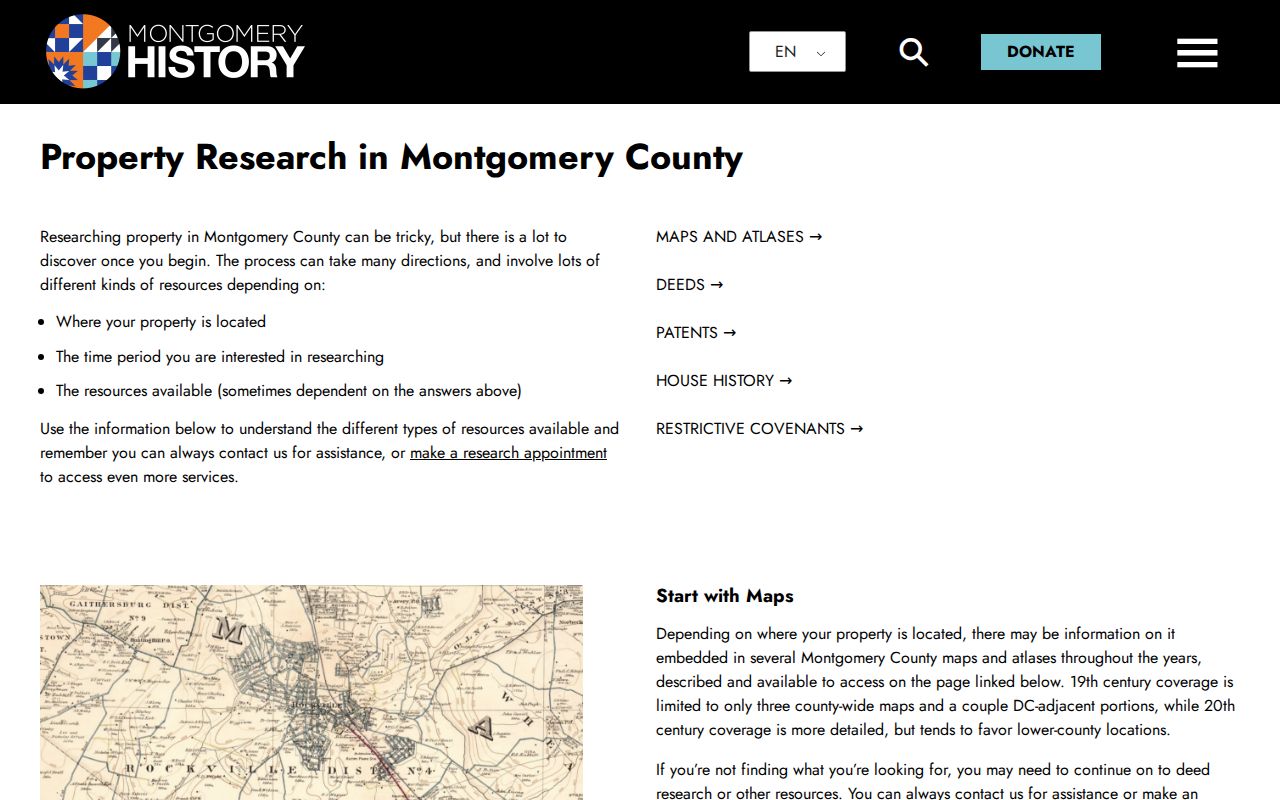
The Silver Spring residents directory keeps household evidence, ownership records, and physical-structure clues in separate lanes, and that separation is what makes a past-residents timeline credible. Permit dates and historic-house files support the timeline in their own way. Note: Neither permit dates nor house files can establish a complete list of past residents on their own.
Silver Spring Previous Residents at Trail End
Probate plus obituary material often explains a name that vanishes from a Silver Spring street address. Maryland Estate Search lets you filter by county. You can also filter by party type, estate type, status, filing date, and estate number. Results can name a decedent, an interested party, a personal representative, and key estate dates. The Montgomery County Register of Wills holds probate records itself. That office also gives you a direct records-request route for any estate or heir question.
Montgomery History rounds out the paper trail. Its obituary files, family files, and church material sit alongside cemetery cards from 111 cemeteries and family burying grounds. The archives also include the Montgomery County Sentinel from 1855 through 2020. The Gazette runs from 1960 through 2015. These collections make strong endpoints for a previous-residents timeline. Compare each date and source against the final directory, deed, or census observation you have. Then label any unproven connection as a lead, not a fact. Use the search fields to steer a family-history question toward the right estate file. Resist assuming every interested party ever lived at the address in question. The Montgomery County Register of Wills remains the local estate-office route for the county.
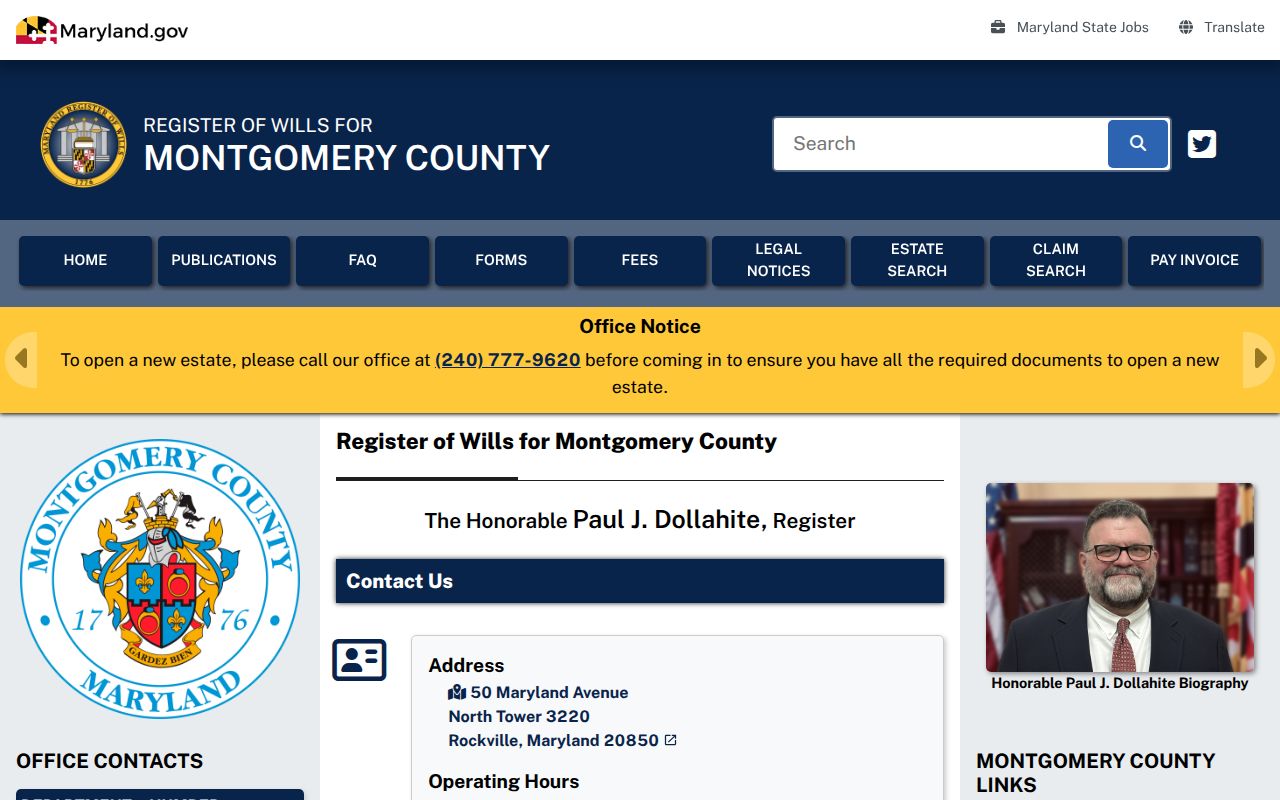
Estate records add a dated representative or interested party to the trail. Deed and directory evidence for Silver Spring past residents still stands on its own, separately documented.